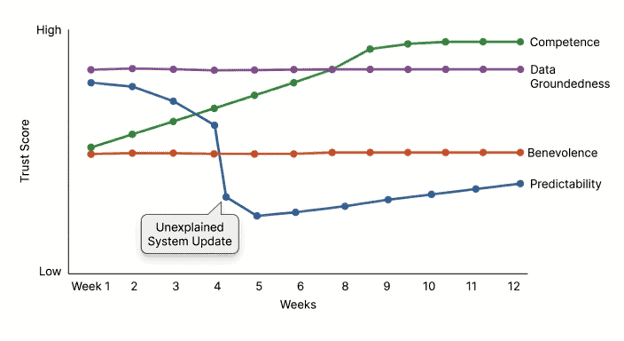
This article covers three practical approaches for studying agentic AI when the system’s behavior is a moving target. Trust is inherently longitudinal over time. A snapshot study capturing the moment alone describes almost nothing about how the relationship is changing, which misses the evolving relationship arc. The author discusses using modified diary studies, longitudinal trust…
Most healthcare workers operate across a fragmented digital landscape: different logins, interfaces, and data sources that don’t talk to each other. Yet legacy systems persist in healthcare because users know how to get the information they need, even when the system makes it harder than it should. Trust has real value when human well-being is…
A review of UX for AI: A Framework for Designing AI-Driven Products discusses a practical, strategic guide for designers and researchers creating AI-powered products.
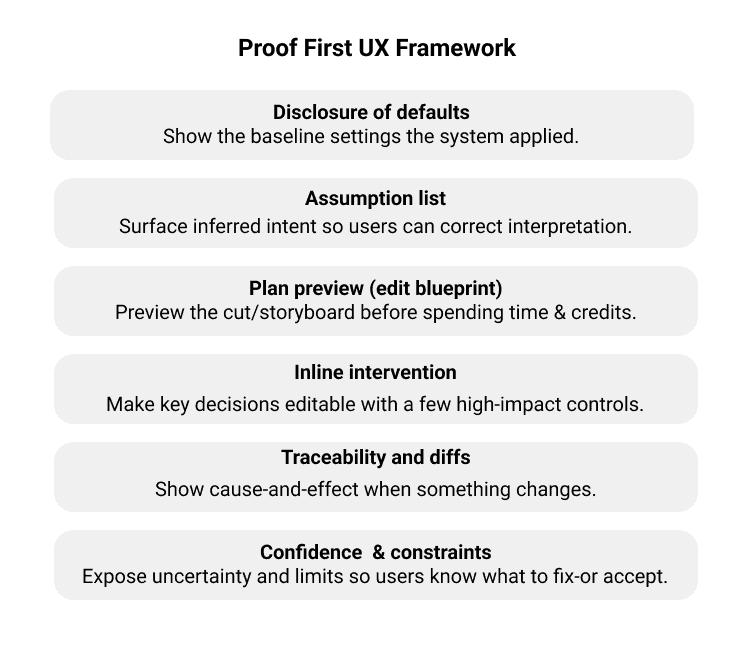
I discovered AI video editing the way a lot of us did—first with curiosity, then with a little obsession. One evening, I downloaded a couple of new apps, tools like HeyGen™ and Capcut™,and I tried to turn a rough idea into a video clip a few seconds long. It worked… sort of. I typed a…
Curiosity is needed in team culture for real innovation to take place. Curiosity happens at every level, but senior team members play a key role.
UX practitioners can become successful change agents for their organizations. The author presents a process with seven core principles that you can follow.
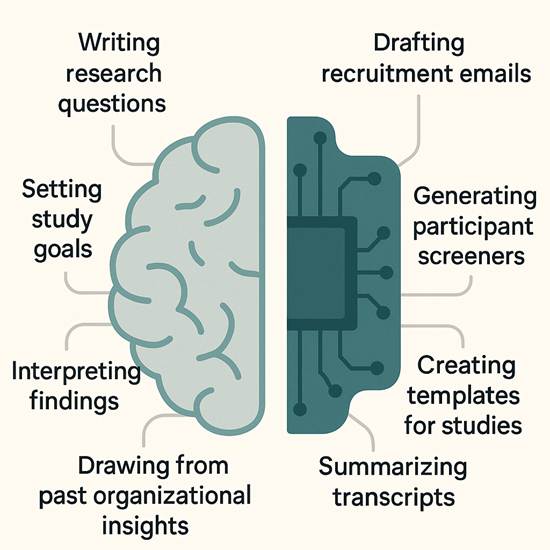
Artificial Intelligence (AI) tools include many options that can reduce research time through the process of Rapid Research.
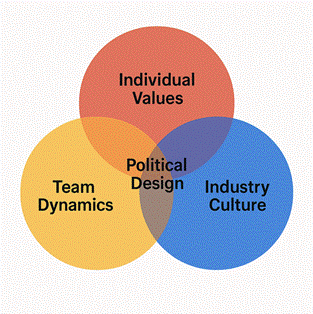
Understanding the dynamics of Political Design gives insight into why some ideas flourish while others diminish, and how individuals, teams, and industries can directly contribute to the design of our world.
A review of Product Management For UX People by Christian Crumlish. This book examines the roles of PMs and UX professionals, exploring how their responsibilities intersect and diverge.
The human brain has natural variations in functionality, and individual cognitive function differences impact user experience. Yet designing with certain practices improves a user interface for diverse profiles. Accessible layouts, customization options, consistent communication, and inclusion through the development process make better digital products for everyone.