
Detecting Distress with Mental Health AI
Artificial intelligence in mental health care has become increasingly common in modern mental health care systems. AI tools are employed for mood tracking, anxiety and depression screening, emotional support, and clinical triage. In many ways, these tools offer important benefits because they are private, accessible, and available during moments when a clinician may not be immediately reachable. Despite these advantages, there remains a significant concern regarding how these systems interpret emotional distress across different cultural backgrounds. Many AI-based mental health tools are developed using Western clinical language and Western behavioral datasets. This limits the AI’s ability to recognize mental health concerns across different cultural contexts, including the experiences of immigrant, refugee, and non-Western users.
Culture strongly shapes how people understand suffering, describe symptoms, and seek support. In some communities, the mind and body are not separated as clearly as they are in many Western clinical models. Anxiety may be felt in the stomach, grief may be carried in the chest, and depression may present as deep physical exhaustion. These expressions are not random or meaningless. They are culturally shaped ways of communicating distress. Therefore, mental health AI systems must be able to accurately interpret these signals with greater cultural awareness.
Emotional distress and psychological suffering are not always expressed through direct clinical language. The American Psychiatric Association’s (2022) DSM-5-TR cultural formulation frameworks and the Handbook on Cultural Formulation Interview by Lewis-Fernández et al. (2015) indicate that individuals from immigrant, refugee, and non-Western cultural backgrounds do not always describe emotional distress using terms such as depressed, hopeless, or worthless. Instead, psychological suffering may be communicated through physical symptoms, culturally specific metaphors, or expressions of social and family-related concerns. In many cultural contexts, the body becomes the primary way that emotional pain is understood and expressed. Consequently, as demonstrated by Yang et al. (2024) regarding demographic biases in digital health, when AI systems are not trained to recognize these forms of communication, the systems may overlook the deeper meaning behind the user’s symptoms.
The detection gap is a key factor contributing to the misinterpretation of culturally expressed psychological distress. It happens when mental health AI systems fail to identify distress signals because the signals do not fit Western clinical vocabulary. An AI system may recognize depression in a user stating “I cannot get out of bed” but not in users from immigrant or non-Western communities who express their emotional pain as a heavy feeling in the chest, persistent fatigue, stomach discomfort, headaches, or other culturally shaped expressions of distress. The system may be too limited in the types of emotional language it uses to understand anything other than clinical mental health terminology. As a result, the AI may receive a user’s message but still fail to assign the accurate psychological meaning. Physical complaints can be misclassified when mental health models rely primarily on Western clinical terminology.
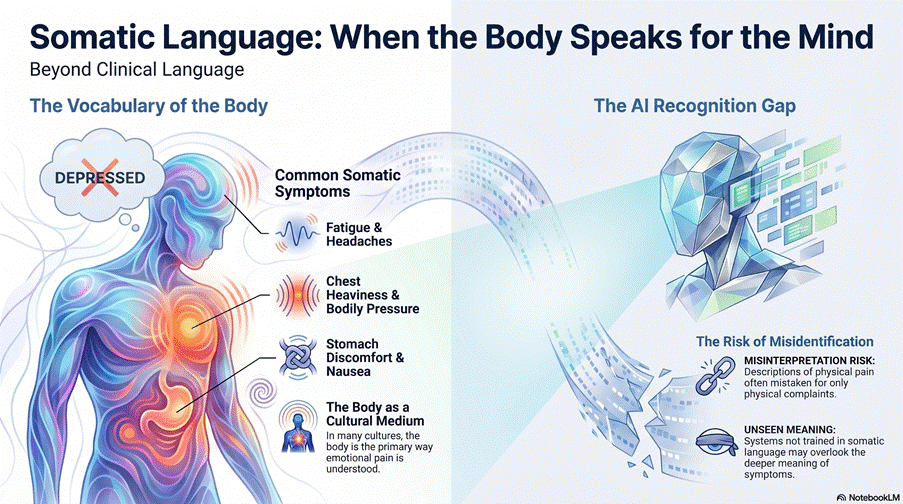
Figure 1. Somatic language is how the body speaks for the mind (generated with Google™ NotebookLM™).
In addition to recognition and routing failures, these limitations can affect user trust. When people repeatedly feel that their experiences are misunderstood, ignored, or reduced to isolated physical symptoms, they may become less willing to engage with mental health technologies. This challenge is particularly significant for immigrant and underserved communities, in which existing cultural stigma and uncertainty about mental health support may already discourage help-seeking behaviors. As a result, the failure to provide culturally responsive interactions can contribute to higher rates of disengagement and reduced long-term use of AI-supported mental health tools.
To address these limitations, we propose the HACA-MH framework, that is, the Human-Centered and Culturally Adaptive Mental Health AI. Rather than a single product or algorithm, HACA-MH is an integrated AI/UX design framework that combines machine learning adaptation with culturally responsive user experience principles. This distinction is important because improving technical performance alone is insufficient if users still experience the system as culturally disconnected, unsafe, or difficult to trust. Accordingly, the framework focuses on both how AI systems interpret user input and how they communicate support back to users.
Principle 1: Recognizing Cultural Idioms of Distress
The first principle of HACA-MH is to teach AI systems to recognize cultural idioms of distress rather than relying solely on clinical vocabulary. Individuals from different cultural backgrounds do not always describe emotional suffering using terms such as depressed, hopeless, or anxious. Instead, distress may be communicated through culturally specific expressions and metaphors. As argued by Kleinman (1982), people may describe their experiences using phrases that reflect bodily sensations or culturally meaningful ways of expressing emotional pain. These expressions should not be dismissed as simple metaphors. For many individuals, bodily sensations represent the most accurate and socially acceptable way to communicate suffering. Therefore, AI systems must expand beyond narrow diagnostic language and learn how emotional distress is expressed across diverse cultural contexts.
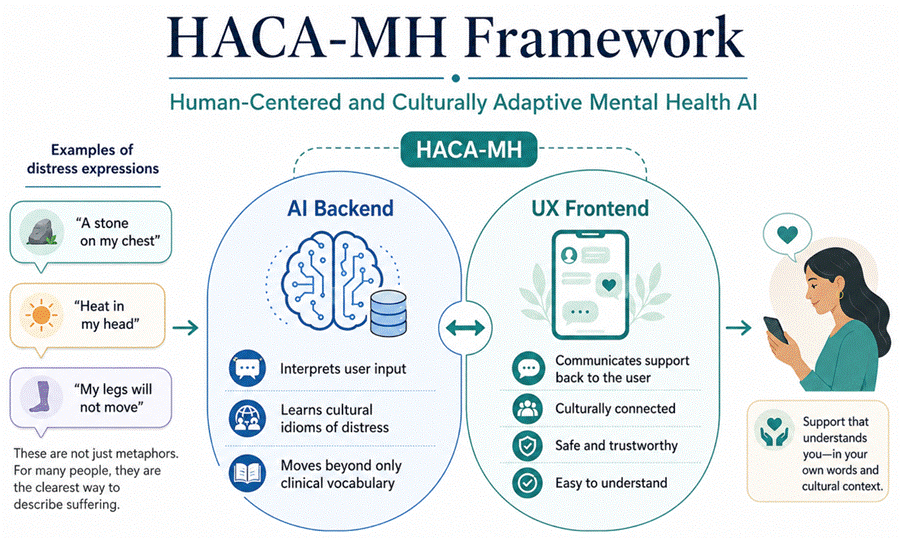
Figure 2. The HACA-MH framework (generated with NotebookLM).
In the HACA-MH framework, an AI backend is trained to recognize cultural idioms of distress and move beyond narrow clinical vocabulary, while the UX frontend focuses on delivering support that is culturally connected, trustworthy, and easy to understand. Together, these components help reduce the detection gap and improve mental health support for culturally diverse populations.
Principle 2: Recognizing Somatic Expressions of Distress
The second principle is to treat physical symptoms as possible emotional data. This is necessary because bodily symptoms can carry psychological meaning, especially when they appear in a mental health or well-being context. Fatigue, nausea, headaches, chest pressure, and stomach pain may not always be separate from emotional distress, according to Kleinman (1982). In some cases, physical symptoms may be the person’s main way of communicating anxiety, depression, or unresolved stress. Therefore, mental health AI should not immediately redirect these symptoms away from psychological support. Instead, the system should be able to consider whether somatic symptoms may also reflect emotional suffering.
Principle 3: Designing for Mental Health Stigma and Cultural Sensitivity
The third principle focuses on designing with stigma in mind. In many immigrant communities, mental health concerns may be associated with shame, family judgment, personal weakness, or fear of social exclusion. As a result, individuals may hesitate to engage with digital tools that use direct clinical terminology such as mental health screening, psychiatric assessment, or psychiatric triage. According to Gopalkrishnan (2018), such language can unintentionally create barriers to engagement and discourage users from seeking support. To address this challenge, culturally responsive mental health AI systems should carefully consider how information is presented. Alternative phrases such as stress check-in, well-being conversation, emotional support, or wellness reflection may feel more approachable and less intimidating to users who are uncomfortable with clinical labels. Such labels align with the inclusive framework for evolving digital mental health tools and generative AI outlined by Torous et al. (2025).
The goal is not to minimize the seriousness of mental health concerns, but rather to reduce stigma-related barriers that may prevent individuals from accessing care.
By using language that is culturally sensitive and psychologically safe, mental health AI can encourage earlier engagement, build trust, and create a more inclusive experience for diverse populations. This approach recognizes that effective support depends not only on what the system can detect, but also on whether users feel comfortable interacting with the system.
Principle 4: Providing Culturally Relevant Explanations
The fourth principle is to make AI explanations culturally relevant. Trust in AI is not experienced in the same way across all communities. Some users may understand well-being through family, community, and social connection rather than only through individual symptoms. Therefore, if the system explains its feedback only through individualistic or highly clinical wording, the user may feel disconnected from the recommendation.
A culturally adaptive mental health AI system should explain its responses in ways that align with the user’s cultural values, communication style, and understanding of emotional health. For example, rather than focusing exclusively on individual symptoms, the system may acknowledge the role of family relationships, social responsibilities, community support, or cultural expectations when discussing emotional well-being. Such explanations can feel more meaningful and trustworthy because they reflect the user’s lived experience and worldview.
This principle is important because transparency alone does not guarantee understanding. Users are more likely to trust and engage with AI recommendations when explanations are presented in culturally familiar and personally relevant ways. By adapting explanations to diverse cultural perspectives, mental health AI can strengthen user trust, improve communication, and support more effective and inclusive care.
Principle 5: Engaging Communities Through Co-Design
The fifth principle is community co-design. Immigrant and refugee communities should not be included only after a system has already been created. Instead, they should be actively involved throughout the entire design process, including user research, participatory workshops, usability testing, design sprints, and model validation.
This principle is important because the communities most affected by mental health inequities often have the clearest understanding of the cultural, linguistic, and social factors that influence help-seeking behaviors and trust in healthcare technologies. Their lived experiences can provide valuable insight into what feels safe, respectful, accessible, and trustworthy. Without their participation, designers may unintentionally create systems that overlook important cultural needs or reinforce existing barriers to care.
A human-centered approach to mental health AI requires viewing culturally diverse users as active contributors rather than exceptions to a presumed mainstream population. By involving immigrant and refugee communities throughout development, designers can create systems that are more inclusive, culturally responsive, and effective at supporting diverse mental health needs. Community co-design also helps ensure that technology reflects the voices of the people it is intended to serve, strengthening both trust and long-term adoption.
Designing in Cultural Diversity
These five principles show why UX practitioners have an important role in improving culturally adaptive mental health AI. Designers and researchers should begin by examining the assumptions embedded within their systems.
Involving Culturally and Linguistically Diverse Participants
UX professionals can contribute to mental health AI systems that are more equitable, trustworthy, and effective across diverse populations by treating cultural diversity as a core requirement rather than a secondary consideration.
UX designers should play an active role in research planning; UX designers can help define recruitment goals, identify potential sources of bias, and ensure that diverse user perspectives are reflected in design decisions from the earliest stages of development. UX researchers should intentionally recruit culturally and linguistically diverse participants throughout the research process, ensuring that immigrant, refugee, and other underrepresented communities are represented in interviews, surveys, usability studies, and validation efforts.
Teams should continually ask which populations were included, which languages were represented, and which cultural communication styles influenced the design and evaluation of the system. If a mental health AI system is built primarily around a narrow group of users, it may already contain a detection gap. In such cases, the technology may function as intended from a technical perspective while still failing to recognize or appropriately respond to the experiences of users whose expressions of distress differ from the assumptions embedded within the model.
Addressing these questions early in the design process can help researchers and designers identify potential blind spots before a blind spot becomes embedded in the final product.
Implementing New Language in the Interface
Beyond recruiting diverse participants and incorporating cultural perspectives into the design process, UX practitioners should examine how mental health AI systems interpret and respond to user input.
During research and testing, UX researchers can identify culturally specific expressions of distress; designers, content strategists, conversation designers, and AI developers can then ensure these expressions are appropriately recognized throughout the user journey. When a user describes an unexpected symptom or concern, the system’s next step matters. If the AI is trained to recognize only a narrow set of emotional keywords, individuals who communicate distress through physical symptoms, cultural idioms, or non-clinical language may be directed away from appropriate support. Therefore, mental health tools should be designed to accommodate multiple ways of expressing emotional suffering, including body-based language and culturally specific forms of communication. Integrating these design adaptations systematically reduces the detection gap, ultimately fostering more equitable and supportive mental health experiences across diverse populations (Kleinman 1982; Yang, et al. 2024).
The language used in the interface is an important part of ethical design. UX writers and content strategists play a critical role in shaping how mental health information is communicated to users. Clinical terminology that feels neutral to designers or developers may be perceived as stigmatizing, intimidating, or culturally inappropriate by some communities. Therefore, the language used in mental health AI systems should be carefully evaluated for cultural sensitivity, accessibility, and emotional safety. Alternative terms such as well-being check-in, stress support, or wellness conversation may encourage engagement among users who are uncomfortable with clinical labels. By designing content that reflects diverse cultural perspectives and communication styles, UX practitioners can help create experiences that feel more respectful, trustworthy, and inclusive, which aligns with established guidelines on overcoming terminology barriers in digital interventions (Gopalkrishnan 2018; Torous et al. 2025).
Words related to mental health, well-being, diagnosis, and emotional difficulty are not neutral. They carry different meanings depending on culture, personal experience, and social context. For some users, direct clinical labels may feel validating. For others, they may create fear, shame, or distance. In addition, many individuals describe emotional distress through physical experiences such as fatigue, headaches, chest pressure, or stomach discomfort rather than through psychological labels such as anxiety or depression. Therefore, mental health AI should use non-pathologizing language and allow users to describe both emotional and physical experiences. This approach can make the system more accurate, culturally responsive, and accessible. It does not remove the clinical purpose of the system. Instead, it enables the system to recognize diverse expressions of distress and reach users who might otherwise feel unseen or misunderstood.
Conclusion
Ignoring culture in mental health AI can reinforce inequities, including through the detection gap and the misinterpretation of culturally diverse expressions of distress. If mental health AI systems recognize only Western expressions of distress, they may fail to understand or appropriately support many users. Culture influences how people describe emotional suffering, seek help, and build trust in healthcare technologies. For this reason, culture should be treated as a core design consideration rather than an optional feature or localization effort. Mental health AI cannot be truly accessible, equitable, or human-centered if it recognizes only one language of distress. In conclusion, mental health AI must be designed with cultural diversity in mind. People express emotional distress in different ways, shaped by their cultural background, language, lived experiences, and help-seeking behaviors. Systems that recognize only Western clinical expressions of suffering risk overlooking or misinterpreting the needs of many users. To promote equitable and effective mental health support, culture should be treated as a core design consideration throughout research, development, content strategy, and evaluation. Mental health AI cannot be truly accessible or human-centered if it recognizes only one language of distress.
Resources
American Psychiatric Association. 2022. Diagnostic and Statistical Manual of Mental Disorders: Fifth Edition, Text Revision (DSM-5-TR). Washington, DC: American Psychiatric Association. https://doi.org/10.1176/appi.books.9780890425763
Gopalkrishnan, Narayan. 2018. “Cultural Diversity and Mental Health: Considerations for Policy and Practice.” Frontiers in Public Health 6: 179. https://doi.org/10.3389/fpubh.2018.00179
Kleinman, Arthur. 1982. “Neurasthenia and Depression: A Study of Somatization and Culture in China.” Culture, Medicine and Psychiatry 6, (2): 117–90. https://pubmed.ncbi.nlm.nih.gov/7116909/
Lewis-Fernández, Roberto, Neil Krishan Aggarwal, Ladson Hinton, Devon E. Hinton, and Laurence J. Kirmayer. 2015. DSM-5® Handbook on the Cultural Formulation Interview. Washington, DC: American Psychiatric Association Publishing. https://doi.org/10.1176/appi.books.9781615373567
Page, Matthew J., Joanne E. McKenzie, Patrick M. Bossuyt, Isabelle Boutron, Tammy C. Hoffmann, Cynthia D. Mulrow, Larissa Shamseer, Jennifer M. Tetzlaff, Elie A. Akl, Sue E. Brennan, et al. 2021. “The PRISMA 2020 Statement: An Updated Guideline for Reporting Systematic Reviews.” BMJ 372: n71. https://doi.org/10.1136/bmj.n71
Torous, John, Jake Linardon, Simon B. Goldberg, Shufang Sun, Imogen Bell, Jennifer Nicholas, Lamiece Hassan, Yining Hua, Alyssa Milton, and Joseph Firth. 2025. “The Evolving Field of Digital Mental Health: Current Evidence and Implementation Issues for Smartphone Apps, Generative Artificial Intelligence, and Virtual Reality.” World Psychiatry 24 (2): 156–74. https://doi.org/10.1002/wps.21299
Yang, Michael, Abd-Allah El-Attar, and Theodora Chaspari. 2024. “Deconstructing Demographic Bias in Speech-Based Machine Learning Models for Digital Health.” Frontiers in Digital Health 6: 1351637. https://doi.org/10.3389/fdgth.2024.1351637

Tazegul Ovezova is a UX/UI researcher and designer focused on human-centered AI, mental health technology, and inclusive digital experiences. Her work explores culturally adaptive AI systems for underserved populations, with research interests in accessibility, trust, and equitable healthcare technologies.
User Experience Magazine › Forums › HACA-MH: A Culturally Adaptive Mental Health AI Framework for Underserved Populations