
Observing AI in Everyday Contexts
As UX and human factors (HF) practitioners, we are trained to evaluate emerging technologies through various user research studies, design frameworks, and established principles. Nearly 13 years ago, Norman introduced his book on the design of everyday concepts of affordances, mental models, cognitive load, and user agency. Contextual inquiries can create a lot of value, but many times, studies happen in controlled environments or professional settings. Yet, some of the most meaningful insights into how technology affects people emerge not from formal studies, but from everyday life.
Recently, I witnessed an interaction between my children and an AI-powered storytelling tool that challenged several of my own assumptions about artificial intelligence and creativity. What I observed was not the automation of imagination or a replacement for human expression. Instead, the interaction was a carefully scaffolded creative experience—one that highlighted the importance of agency, cognitive load management, and emotional safety in child-centered AI design.
This experience prompted me to reconsider, not only as a parent, but also as a human factors professional, what responsible, human-centered AI for children can look like when designed and used thoughtfully.
When Writing Feels Hard
My children had already reached their allotted TV and video game time for the day, so they were reading quietly. Earlier that week, they had been invited to participate in a school contest focused on story creation. They chose not to participate. When I asked why, their response was simple and familiar. They didn’t know what to write about, and they were not particularly motivated to start.
This moment resonates with many educators and parents. Writing, especially creative writing, often presents a cognitive barrier for children. This barrier can be more of a challenge for kids with ADHD. The challenge is not a lack of imagination, but the friction of initiation: Where do I begin? Is my idea good enough? What if I do it wrong? Ugh, do I have to write?
Shortly after, an AI assistant in our home introduced a new feature that allowed children to create their own stories. My initial reaction was concern. As a family, we intentionally limit device usage and apply strict privacy and time controls. I am deliberate about how technology shows up in our home, particularly when it involves systems that listen, respond, and adapt. But rather than intervening immediately, I chose to observe. What followed was unexpected and instructive. Figure 1 depicts the night table of a creative child who started asking Alexa+™ to create a story about a dog.
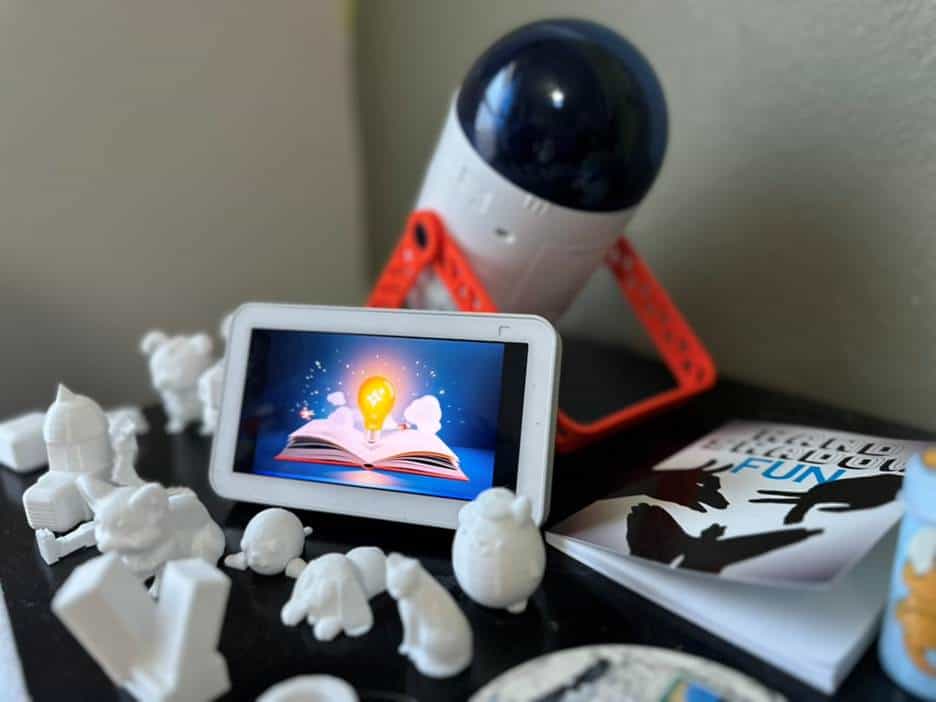
Figure 1. Alexa+ generating a story based on initial prompts from child 1 (generated with Alexa+).
AI as an Enabler of Creative Agency
Research has consistently shown that representation in children’s books and media plays a critical role in shaping identity, confidence, and a sense of belonging. Researchers such as Adukia and colleagues have demonstrated that the images and stories children encounter influence how they perceive themselves and others. Similarly, Humanium and the International Literacy Association have emphasized that children benefit from seeing characters who reflect their own identities, experiences, and cultures.
My children own personalized books in which their names are woven into the story. Yet, although these books are engaging and help create a personal connection, the narrative is still authored by someone else. A child appears in the story, but the child is not truly its creator or decision-maker. This distinction highlights an opportunity for a new generation of storytelling experiences that move beyond personalization and empower children to actively shape their own narratives. This interaction is different.
As my children engaged with the AI storytelling feature, they directed the narrative themselves. They created a dog modeled after our family pet. This was an instantly meaningful character (Figure 2). The dog traveled to space, went on vacation, and encountered challenges that required leadership, teamwork, and perseverance. The story evolved organically as the children added details, made decisions, and explored outcomes.
The AI did not prescribe a plot or define success. The AI responded to the children’s prompts, adapted to evolving details, and followed their direction. From a human factors perspective, this distinction is critical: The system preserved user agency, allowing the children to remain authors rather than operators. The AI functioned as a responsive tool, not as a creative authority.
Human Factors Principles in Action
Several core human factors principles were observable throughout this interaction. These concepts are often discussed abstractly in professional contexts, but seeing them manifest naturally in a child-centered experience was powerful.
User Agency
As Ben Shneiderman argued, a fundamental principle of human-centered AI is ensuring that users feel that they are in control. That principle was central to this storytelling experience. Rather than following a predetermined narrative, the children directed the story’s pace, chose its characters, decided what mattered, and determined when the plot would change course.
For children, agency is closely linked to confidence, motivation, and engagement. Every decision they made immediately shaped the experience, reinforcing a genuine sense of ownership. They were not simply responding to prompts or following instructions; they were creating the story themselves. Don Norman has long emphasized that products become more meaningful when people feel they are active participants rather than passive users. In this experience, the children were not just reading a story; they were authoring it.
Cognitive Load
Creative tasks often fail not because people lack ideas, but because getting started feels overwhelming. Educational psychologist John Sweller’s work on cognitive load explained that reducing unnecessary mental effort allows people to focus on learning and problem-solving rather than struggling with the process itself. In our experience, the AI reduced Sweller’s “blank-page paralysis” by offering lightweight prompts that provided structure without dictating the story. Rather than confronting an empty page or broad instructions to write a story, the children responded to manageable prompts that built momentum while preserving their creative ownership. Each interaction lowered the barrier to participation without limiting imagination, allowing the children to remain the authors of their own ideas.
This approach has the potential to do more than support storytelling; it may encourage creativity and strengthen children’s confidence. A 2024 Crayola™ study found that 92% of children ages six to 12 believe creativity boosts their confidence, whereas 65% said creative activities make them feel happy and excited to participate. By reducing cognitive effort while preserving freedom of choice, AI can help children move from hesitation to creation, making creativity feel more accessible and rewarding.
Emotional Safety
Emotionally safe experiences encourage exploration by removing the fear of failure. Research by Shenghao Han, Dewen Liu, and Yiliang Lv found that psychological safety fosters creativity by empowering people to experiment and express their ideas with confidence, a principle that was evident throughout this storytelling experience. There were no wrong answers, no corrections, and no evaluative feedback. Instead, the AI responded with encouragement and curiosity, giving the children the confidence to explore, revise, and imagine freely.
This type of environment is especially important for young creators. When children feel safe to experiment without the fear of being judged, their motivation shifts from performing well to discovering what they can create. The focus moves from finding the right answer to expressing their own ideas.
In our experience, AI did not generate creativity for the children. It created the conditions for creativity to emerge. Rather than replacing imagination, the technology reduced barriers, encouraged exploration, and amplified each child’s unique voice.
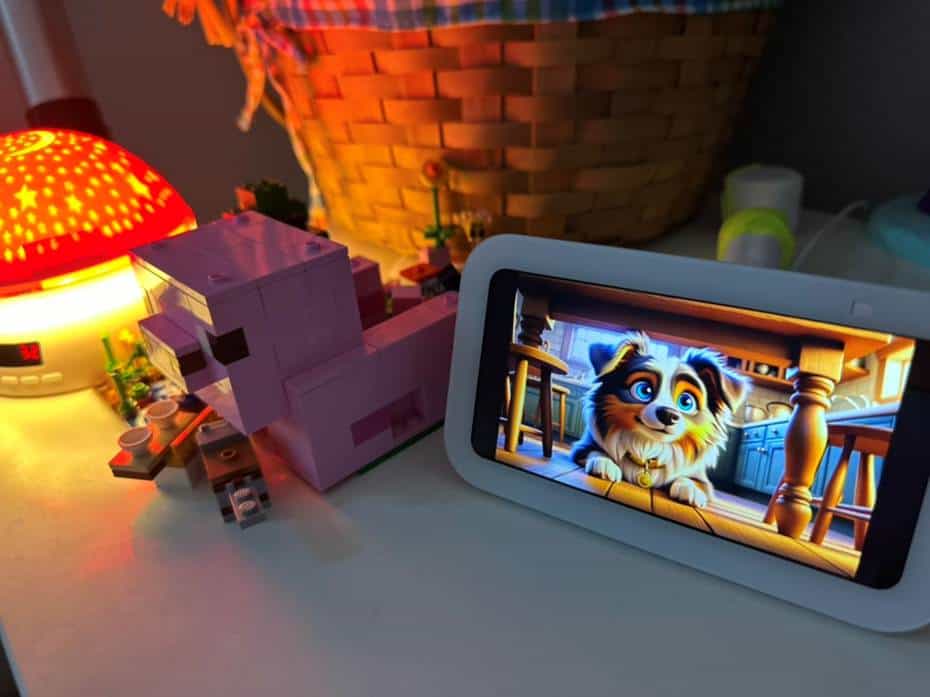
Figure 2. An Alexa+ image generated by key prompts to shape an identity for a key character, based on prompts from child 2 (generated with Alexa+).
Addressing Common Concerns About AI for Children
Skepticism about AI for children is both reasonable and necessary. As practitioners, we should not dismiss concerns but examine them critically and contextually.
Does AI Replace Creativity?
In this case, it did not. The AI did not generate the story independently or steer it toward predefined outcomes. Instead, it reduced the friction of getting started and responded to child-driven ideas. Creativity remained firmly human-led.
From a design standpoint, this distinction separates assistive systems from generative dominance. When AI supports initiation and continuity without overtaking authorship, it can enhance, not replace, creative efforts.
What About Privacy and Surveillance?
This interaction occurred within strict parental controls, limited usage windows, and direct adult supervision. From a UX and human factors standpoint, AI for children should never be ambient or unsupervised. It must operate within intentional boundaries set by responsible adults.
Designing for children requires explicit consideration of consent, visibility, and control. Transparency and governance are not optional features; they are foundational requirements.
Could Children Form Emotional Attachments to AI?
The emotional engagement observed was not between my children and the AI system. It was between my children and their story. Notably, the creativity extended beyond the interaction itself. The following day, my daughter, who is highly artistic, drew the main character and continued developing the narrative offline.
This is an important distinction. The AI facilitated expression, but the emotional connection remained grounded in imagination, storytelling, and human experience.
Guided, time-bound interactions that support creativity differ fundamentally from passive or prolonged screen consumption. Duration, context, and design intent matter more than the presence of AI itself.
From a human factors lens, these concerns are not reasons to avoid AI entirely. They are signals that design, governance, and adult involvement matter.
Conclusion
This article describes a personal observation of children generating stories with AI. What I observed was not AI replacing creativity, but AI functioning as a cognitive platform for creativity. The system reduced the friction of getting started, preserved child agency, and supported emotionally safe exploration. Creativity remained human-led.
When AI lowers cognitive barriers without overtaking authorship, it can enhance confidence and engagement rather than diminish them.
From a human factors perspective, the question is not whether AI belongs in children’s environments, but how it is designed and governed. Human-centered AI for children must prioritize agency, transparency, bounded use, and adult oversight. When designed responsibly, AI does not replace imagination. It helps unlock it.
Resources
Adukia, A., Alex Eble, Elizabeth Harrison, H. B. Runesha, and Thomas Szasz. 2023. “What We Teach about Race and Gender: Representation in Images and Text of Children’s Books.” The Quarterly Journal of Economics 138 (4): 2225–2285. https://doi.org/10.1093/qje/qjad028
Braga, Amanda. 2022. “The Importance of Children’s Representation in Literature and Media.” Humanium, March 10, 2022. https://www.humanium.org/en/the-importance-of-childrens-representation-in-literature-and-media/
Crayola. 2024. New Crayola Children’s Study Reveals a Powerful Link Between Creativity and Confidence. PR Newswire, December 10, 2024. https://www.prnewswire.com/news-releases/new-crayola-childrens-study-reveals-a-powerful-link-between-creativity-and-confidence-302326950.html
Han, Shenghao, Dewen Liu, and Yiliang Lv. 2022. “The Influence of Psychological Safety on Students’ Creativity in Project-Based Learning: The Mediating Role of Psychological Empowerment.” Frontiers in Psychology 13. https://pmc.ncbi.nlm.nih.gov/articles/PMC9093144/
Norman, Don. 2013. The Design of Everyday Things. Revised and expanded ed. New York: Basic Books.
Shneiderman, B. 2020. “Human-Centered Artificial Intelligence: Reliable, Safe & Trustworthy.” International Journal of Human–Computer Interaction 36 (6): 495–504. https://www.tandfonline.com/doi/full/10.1080/10447318.2020.1741118
Sweller, John. 1988. “Cognitive Load during Problem Solving: Effects on Learning.” Cognitive Science 12 (2): 257–285. https://onlinelibrary.wiley.com/doi/epdf/10.1207/s15516709cog1202_4
Walters, Jawuan. 2025. “Representation in Children’s Books: Unlocking the World for Young Readers.” ILA Reporter. International Literacy Association. https://www.ila.org/publications/ila-reporter/article/220/representation-in-children-books-unlocking-the-world-for-young-readers
Vygotsky, Lev S. 1978. Mind in Society: The Development of Higher Psychological Processes. Cambridge, MA: Harvard University Press. https://www.hup.harvard.edu/books/9780674576292

Natalia Russi-Vigoya is a user experience research leader with over a decade of experience designing human-centered systems across enterprise, AI, and emerging technologies. Her work focuses on smart technologies, translating research insights into responsible, real-world experiences.
User Experience Magazine › Forums › AI and Storytelling for Children: A Human Factors Perspective